External venetians
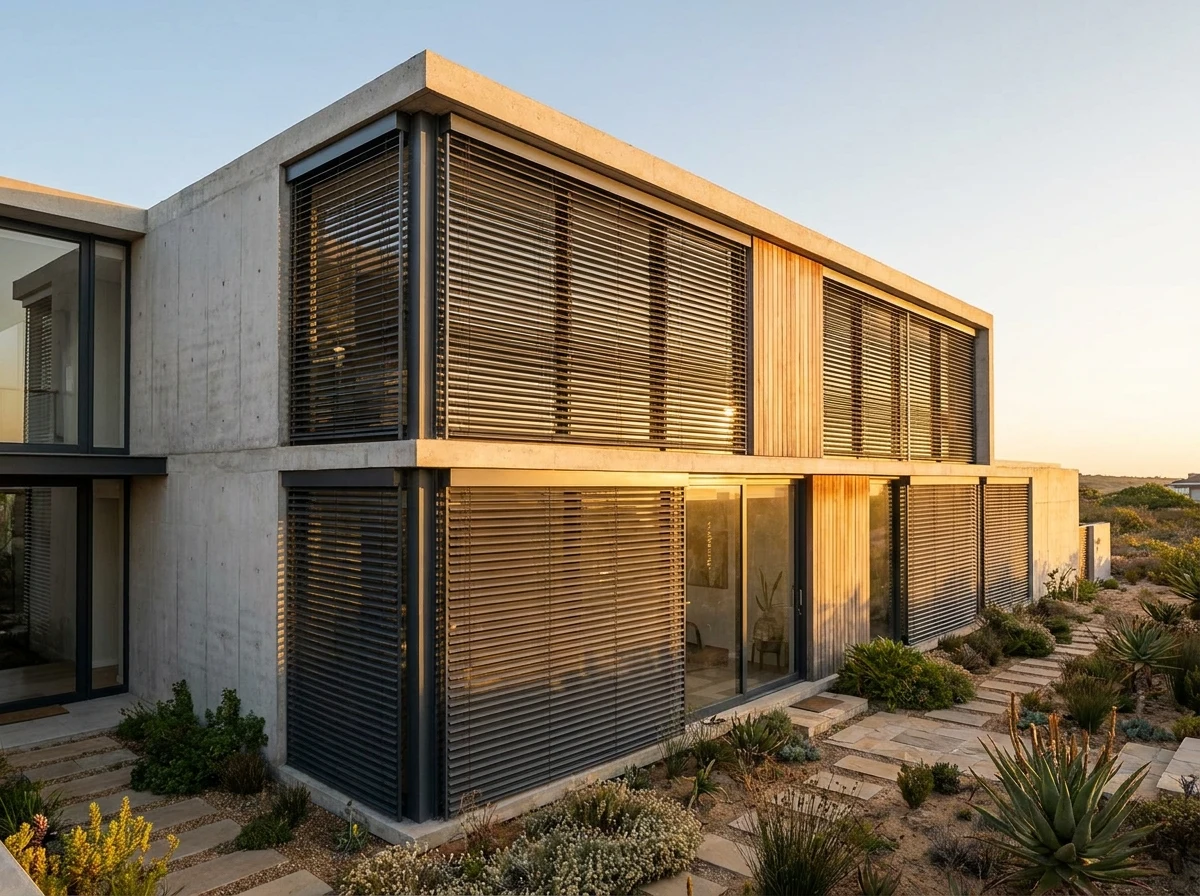
Wide aluminium slats outside the glass. Heat intercepted before it reaches the window, view kept.
Explore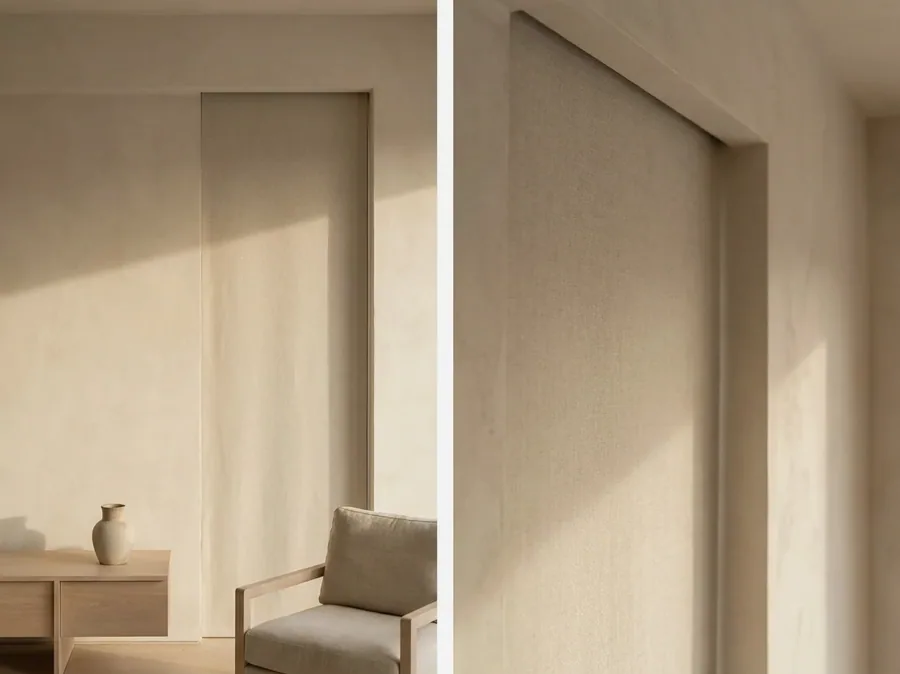
A concealed blind box is a recess built into the ceiling, bulkhead or curtain drop, sized so the tube, brackets and rolled fabric sit entirely inside it. From the room you see a shadow line and a fabric edge. From outside you see clean glass.
It is the specification architects put on the modern rebuilds around here, and it is genuinely worth doing — but it has to be planned. The recess needs a minimum internal depth and height for the roll, a service opening for the motor, and power at the right end. Get us the window schedule early and we will give the builder the exact dimensions before the ceiling closes.
Most Waterkloof houses we are called to are finished, not under construction. In a finished room a colour-matched cassette pelmet does most of the same work: a slim aluminium headbox with end caps and a fabric closure, painted or wrapped to disappear against the ceiling. You keep the clean line without opening the plaster.
A concealed blind is as much a building detail as a window covering, and the price carries the ceiling pocket, the sealed head box and much tighter tolerances. Per square metre installed: R1,600 to R3,000 manual and R3,200 to R5,000 motorised — and motorised is what nearly every box becomes, since a hidden head box leaves nowhere sensible for a chain.
Even a short recess carries a minimum charge, because the pocket, the box and the setting out are the same work at any width. Until someone has looked at the ceiling detail or read the drawings nothing is firm, which is why the written figure only follows the measure.
Often specified alongside
Wide aluminium slats outside the glass. Heat intercepted before it reaches the window, view kept.
Explore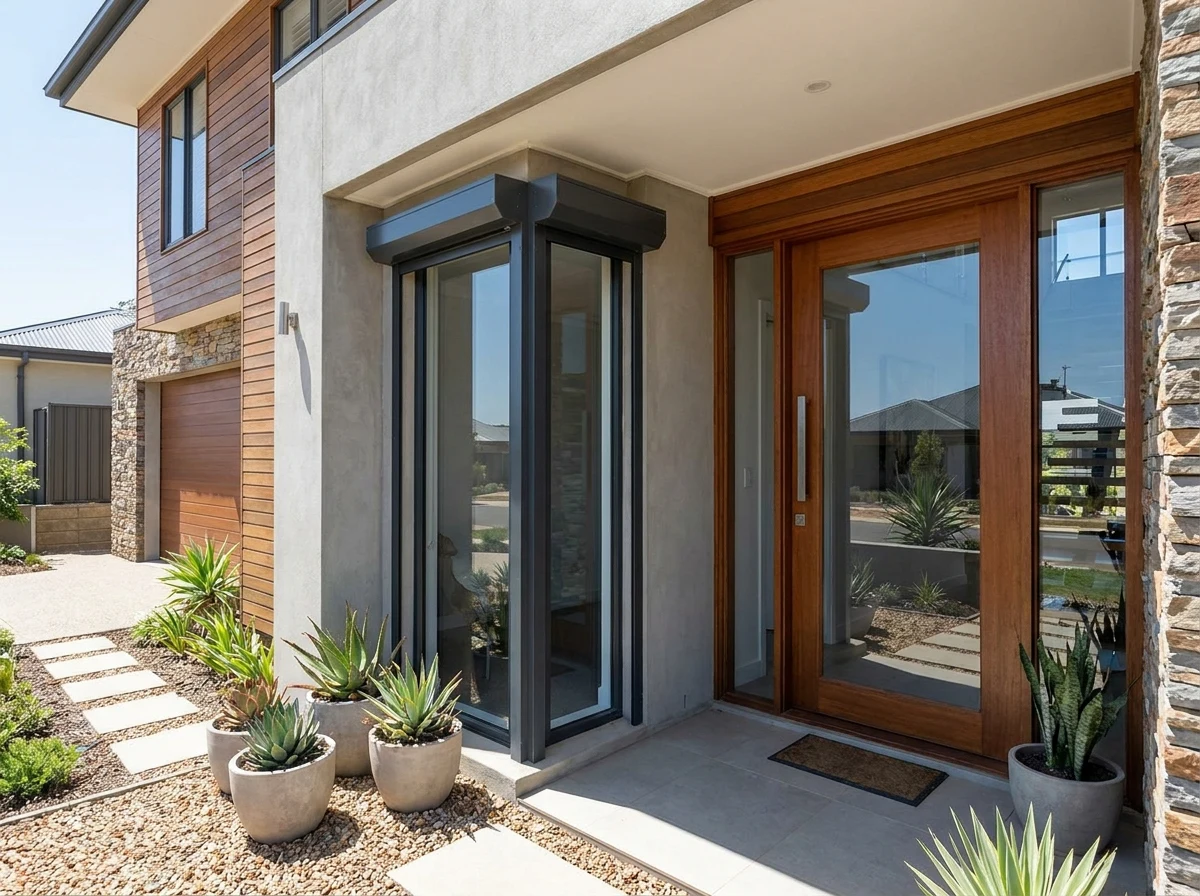
Rigid aluminium slats that roll down outside the glass. Sun, heat and glare stopped before the window.
Explore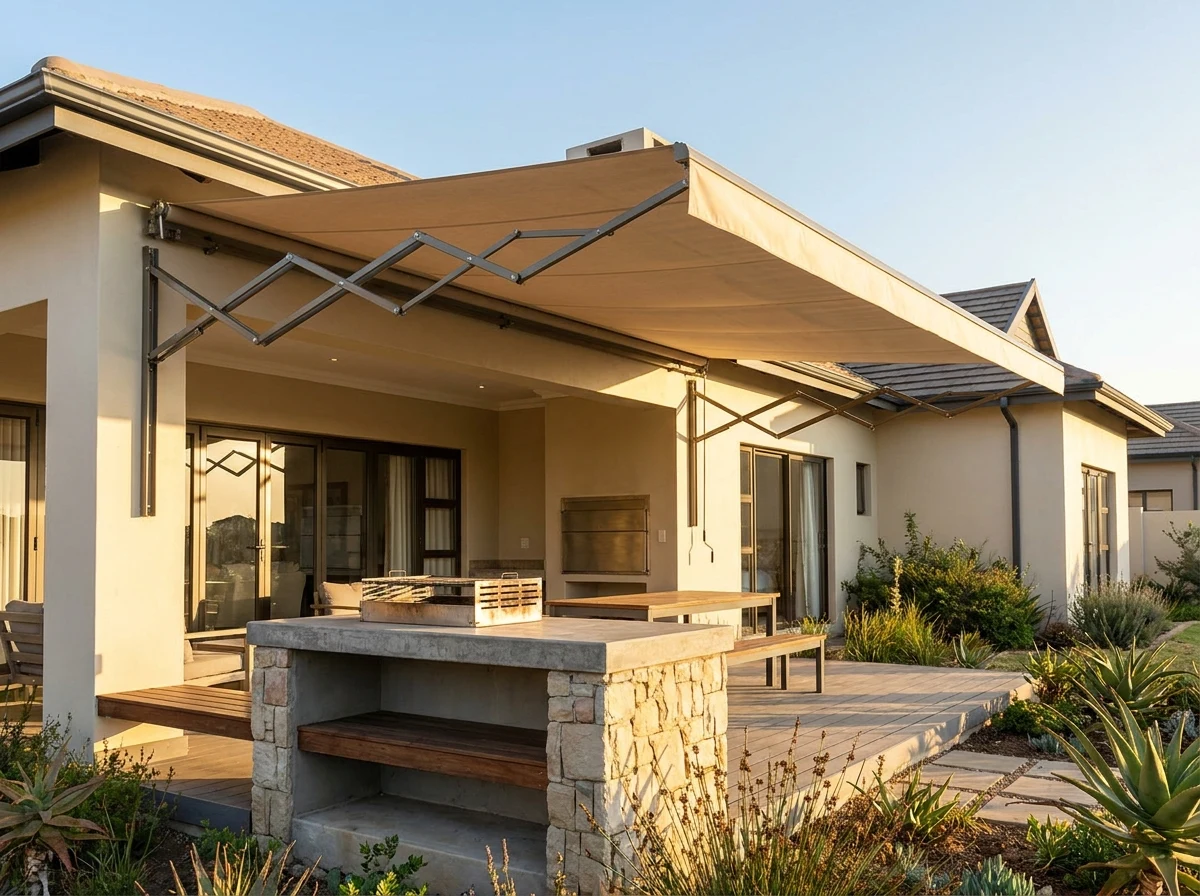
Retractable shade over the terrace with no posts in the way. Out in February, away in June.
ExploreWhere we fit it
Concealed blind boxes get planned into the renovations of Menlo Park and Hazelwood most often, and into new builds on Waterkloof Ridge, in Waterkloof itself, in Groenkloof and in Brooklyn.
Next step
A free in-home measure, samples in your own light, and a written quote itemised per window. One of our expert consultants will contact you shortly.