Vertical blinds
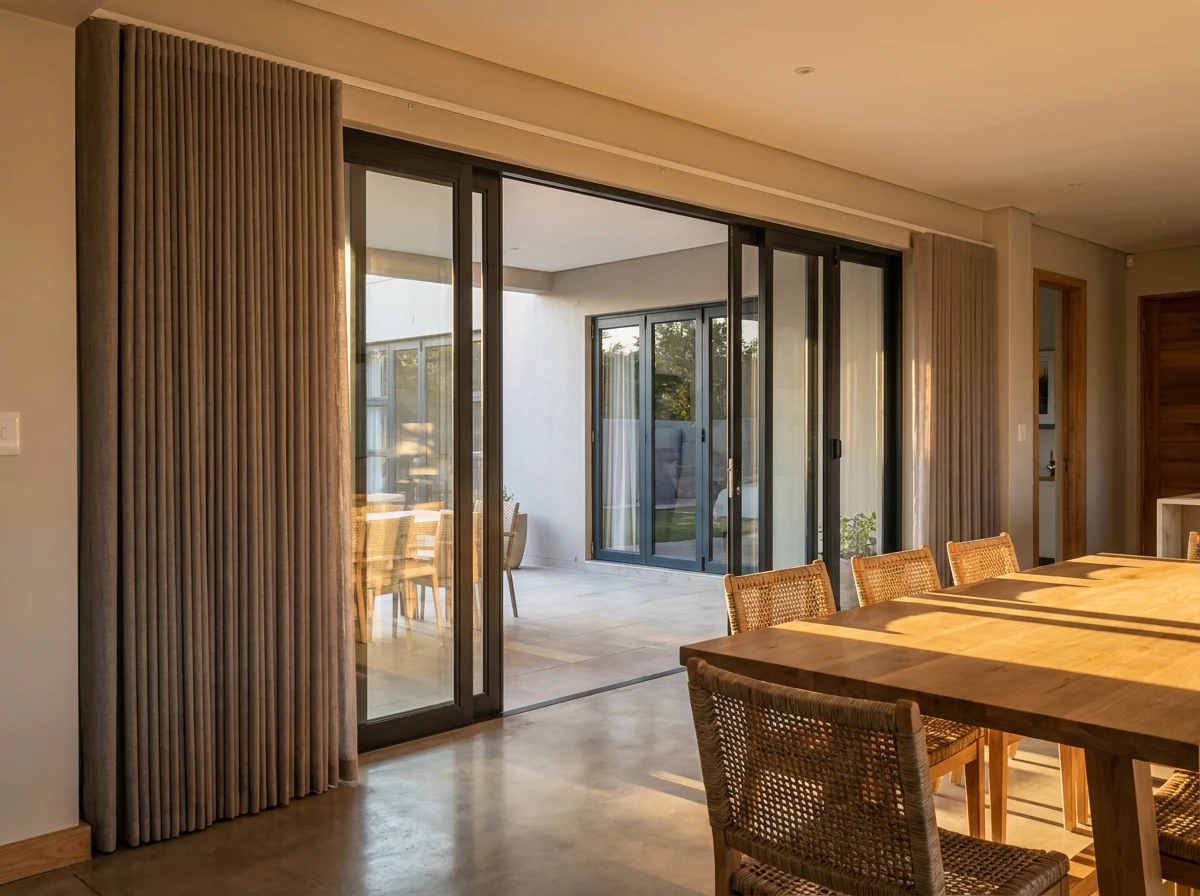
Fabric vanes that tilt for light and stack right out of the way. Sensible cover for very wide glass.
Explore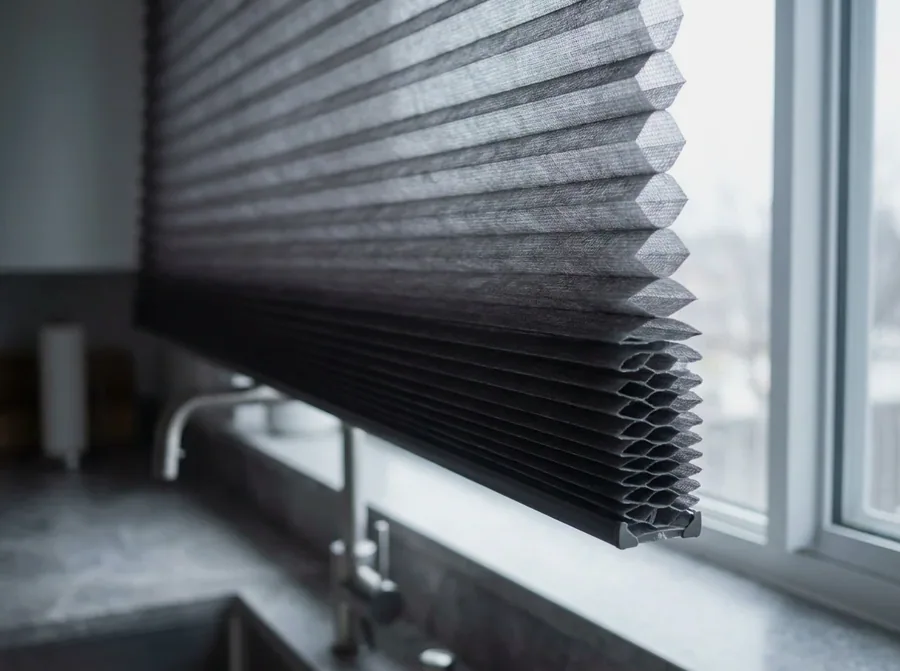
Waterkloof's problem is not average temperature, it is swing. A clear winter day here can run twenty degrees warmer than the night that follows it, and single-glazed windows lose that warmth as fast as the house gains it. A double-cell honeycomb across the glass traps a layer of still air between the room and the pane, which slows the loss at night and the gain in the afternoon.
It works the other way too. On a January afternoon in a west-facing study, a light-coloured cellular blind will hold a noticeable amount of heat at the window instead of letting it into the room.
The cleverest thing a cellular blind does is open from either end. Drop the top rail and you get sky, daylight and no view in from the street. Raise the bottom rail and you get the garden. On a Brooklyn or Hazelwood street window that sits close to the pavement, this is the detail that makes the room usable.
Cellular fabric is a pleated structure, so it is not the blind for a room where things get knocked about — a busy family passage, a doorway that takes a bicycle every afternoon. In those rooms an aluminium venetian or a roller will take the punishment better.
Cellular blinds cost more than a flat fabric because the honeycomb is insulating as well as shading — worth the difference on a big single-glazed pane in an older house. That means R1,500 to R2,800 the square metre installed on a corded or cordless lift, and R3,000 to R4,800 with a motor. Double cells, a blockout lining and a top-down-bottom-up head rail each move a window up its band.
Anything narrow is charged at a minimum: the head rail and the fitting time stay the same however small the pane. The bands are for planning only; the per-window number comes out of the free measure, in writing.
Often specified alongside
Fabric vanes that tilt for light and stack right out of the way. Sensible cover for very wide glass.
Explore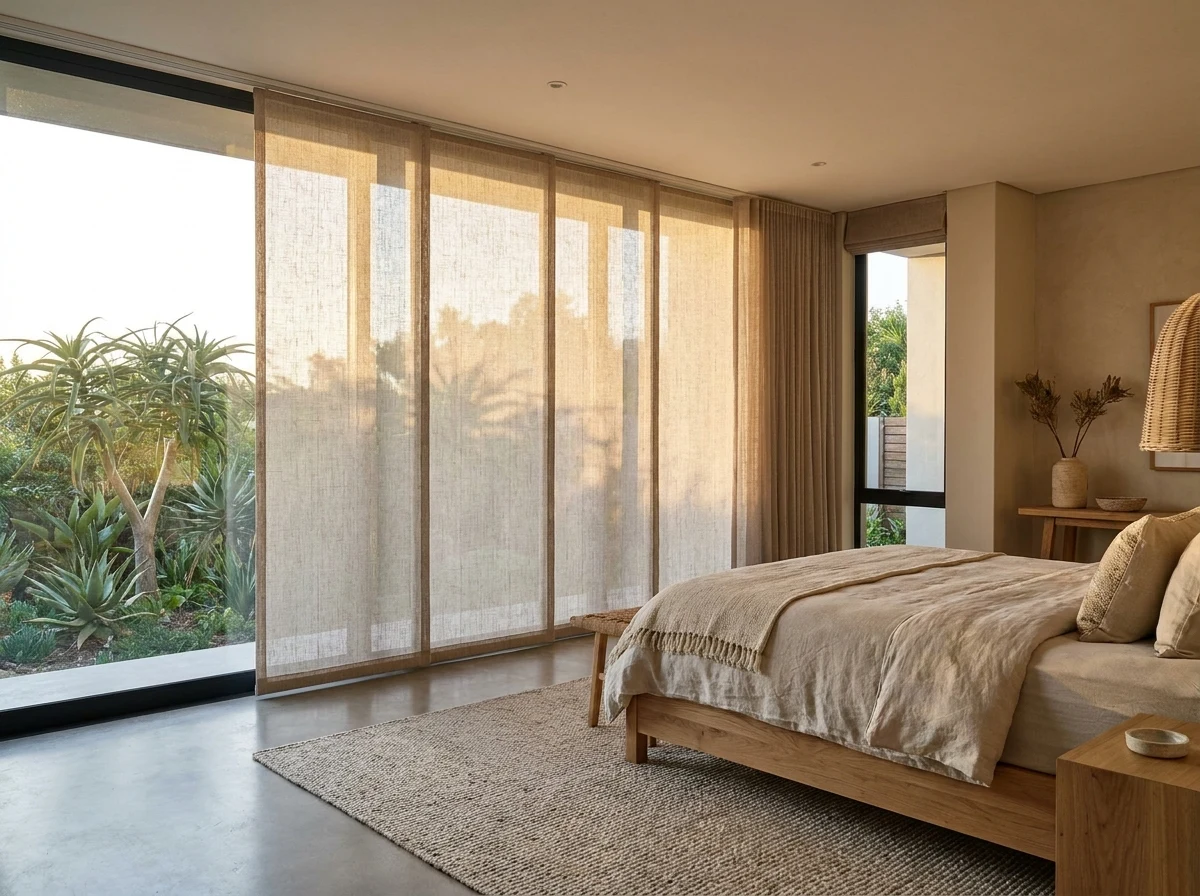
Large flat panels gliding on a multi-channel track. An architectural way to dress three metres of glass.
Explore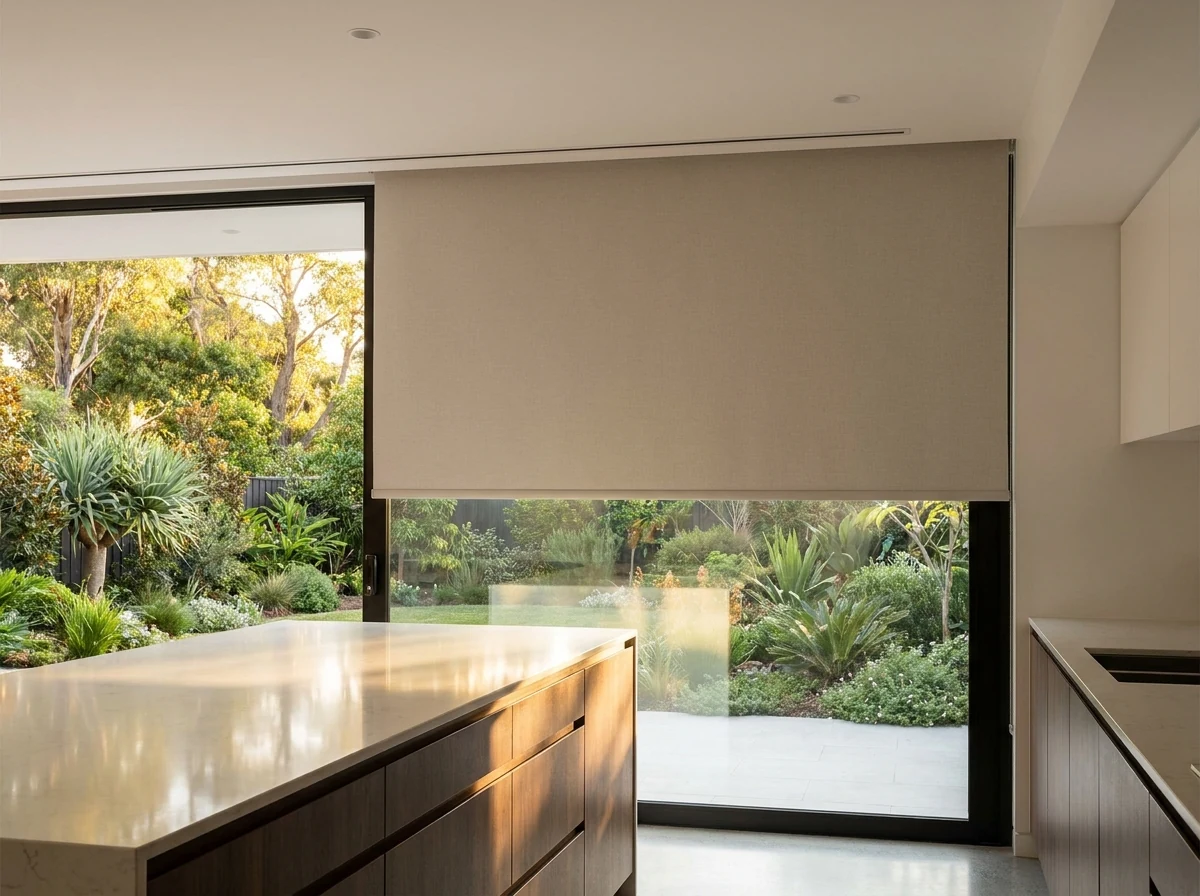
Fabric dropping from a slot in the ceiling, every bracket hidden. Planned at build stage, invisible afterwards.
ExploreWhere we fit it
Cellular honeycomb is Hazelwood's most-requested blind and a regular fit in Brooklyn's older apartments too, and we supply it just as readily on the Ridge, in Groenkloof and in Menlo Park.
Next step
A free in-home measure, samples in your own light, and a written quote itemised per window. One of our expert consultants will contact you shortly.